The Complete Guide to Agricultural Equipment for South African Farms
Maximize Your Farm’s Productivity with Modern Machinery
South Africa’s agricultural sector is the backbone of our economy, feeding millions and contributing significantly to exports. Whether you’re managing a small family farm or a large commercial operation, having the right equipment can transform your productivity, reduce labor costs, and improve crop quality. In this comprehensive guide, we’ll explore essential agricultural machinery that every modern South African farmer should consider.
Round Balers: Revolutionizing Hay and Silage Production
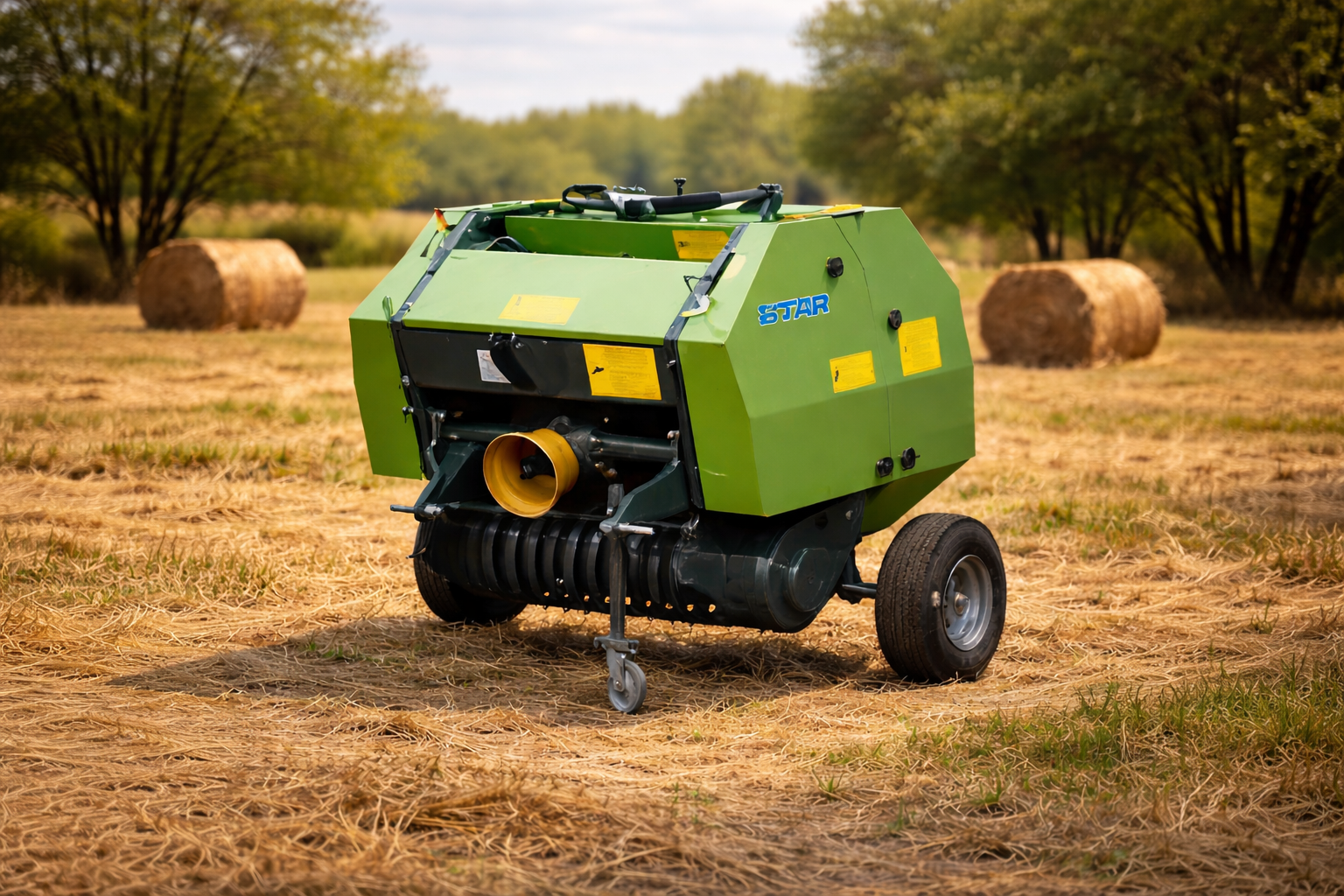
Round balers have become indispensable for livestock farmers across South Africa. These powerful machines compress cut hay, straw, or silage into compact, cylindrical bales that are easier to handle, transport, and store than traditional square bales.
Why Round Balers Matter
- Weather Protection: Round bales naturally shed water, reducing spoilage during South Africa’s unpredictable rainy seasons – critical for maintaining feed quality and reducing waste
- Labor Efficiency: One operator can bale hundreds of tons per day, dramatically reducing labor costs and time spent in the field
- Storage Optimization: Round bales can be stored outdoors without significant degradation, freeing up barn space for other uses
- Transport Convenience: Their cylindrical shape makes them easier to roll, stack, and load onto trucks for transport
Choosing the Right Round Baler
When selecting a round baler, consider bale size (typically 4-6 feet in diameter), chamber type (fixed or variable), and whether you need a net wrap or twine system. Variable chamber balers offer more flexibility in bale density and size, making them ideal for diverse operations. Brands like Aurora and Valiant Power offer reliable models suited to South African farming conditions, with robust construction that can handle our tough grasses and demanding field conditions.
Disc Mowers: Precision Cutting for Maximum Yield
The quality of your cut directly impacts the quality of your hay or silage. Disc mowers have revolutionized forage harvesting with their speed, precision, and ability to handle diverse terrain conditions common in South African farms.
Superior Cutting Technology
Unlike traditional sickle bar mowers, disc mowers use multiple rotating discs with small blades that create a clean, scissor-like cut. This technology offers several advantages that directly translate to better profits and easier management.
- Higher Ground Speed: Cover 15-20 acres per hour compared to 8-10 with traditional mowers, getting more work done in less time
- Cleaner Cut: Reduces plant stress and promotes faster regrowth, improving your next harvest and overall field productivity
- Terrain Adaptability: Individual disc suspension allows mowing on uneven ground without scalping or missing spots
- Reduced Maintenance: Fewer moving parts and better protection from debris mean less downtime and lower repair costs
Best Practices for Disc Mower Use
To maximize your disc mower’s lifespan and performance, maintain sharp blades and proper disc spacing. Check for loose bolts and damaged discs before each use. Modern disc mowers from brands like Valiant Power and Aurora come with quick-change blade systems that minimize downtime. Always mow at the optimal height for your crop—typically 3-4 inches for most grasses—to encourage vigorous regrowth while maintaining root reserves.
Tedders and Rakes: The Secret to Perfect Hay
The period between cutting and baling is critical for hay quality. Proper drying prevents mold, preserves nutrients, and ensures safe storage. Tedders and rakes are your essential partners in this crucial phase.
Tedders: Accelerating the Drying Process
Tedders lift and spread cut hay, exposing more surface area to sun and wind. This mechanical aeration can reduce drying time by 30-50%, allowing you to bale sooner and reduce weather risk. In South Africa’s variable climate, this speed advantage can mean the difference between premium hay and composted waste.
- Even Drying: Fluffs the crop uniformly, preventing wet pockets that could spoil an entire bale
- Leaf Preservation: Gentle handling retains valuable leaves that contain the highest protein and nutrient content
- Multiple Passes: Can be used 1-2 times per day to continuously expose damp material to air and sunlight
Rakes: Creating Perfect Windrows
Once hay reaches optimal moisture (typically 15-20%), rakes gather it into windrows—neat rows that make baling efficient and consistent. Modern rotary rakes are gentler on the crop than older wheel rakes and can handle larger volumes faster.
- Adjustable Windrow Width: Match windrow size to your baler’s capacity for optimal efficiency
- Ground-Following Design: Contours to uneven terrain without leaving hay behind or picking up dirt and rocks
- Gentle Crop Handling: Minimizes leaf loss and maintains hay quality throughout the raking process
Bale Wrappers: Protecting Your Investment
For silage production or long-term hay storage, bale wrappers are game-changers. By sealing bales in multiple layers of plastic film, you create an anaerobic environment that preserves feed quality for 12-24 months while protecting against weather damage.
Benefits of Wrapped Silage
- Extended Storage: Store feed for years without deterioration, allowing you to capitalize on surplus production
- Outdoor Storage: No barn required—wrapped bales can withstand rain, sun, and temperature extremes
- Higher Nutritional Value: Fermentation process preserves more nutrients than dry hay, improving livestock performance
- Flexible Harvest Timing: Harvest at optimal maturity without waiting for perfect drying weather
- Reduced Waste: Properly wrapped bales have minimal spoilage, protecting your feed investment
Choosing the Right Wrapper
Bale wrappers come in various configurations—individual bale wrappers are ideal for smaller operations, while in-line wrappers can process multiple bales in one continuous wrap for larger farms. Look for features like adjustable film overlap (typically 50-70%), weather-resistant construction, and compatibility with your bale size. Brands available through Phoenix Equipment offer reliable wrapping technology designed for South African agricultural conditions.
Making the Right Equipment Investment
Selecting agricultural equipment is a significant investment that will impact your farm’s productivity for years to come. Here’s how to make informed decisions that align with your operation’s needs and budget.
Assess Your Operation’s Scale
Calculate your acreage, crop types, and annual production volume. A 100-hectare operation has vastly different needs than a 1,000-hectare farm. Right-sizing equipment prevents both under-capacity bottlenecks and the inefficiency of oversized machinery sitting idle.
Consider Long-Term Value
While initial cost matters, evaluate the total cost of ownership including fuel efficiency, maintenance requirements, parts availability, and expected lifespan. Equipment from established brands like Aurora, Valiant Power, Yard Force, and Okepro Star typically offer better parts support and longer operational life, making them smarter long-term investments despite potentially higher upfront costs.
Match Equipment to Terrain and Crops
South Africa’s diverse agricultural regions demand equipment that can handle local conditions. Rocky Karoo pastures require different mower specifications than lush Natal grasslands. Similarly, lucerne demands different baling density than veld grass. Expert guidance ensures you select equipment optimized for your specific situation.
Plan for Workflow Integration
Your mower, tedder, rake, baler, and wrapper should work as a coordinated system. Mismatched capacities create bottlenecks—a high-capacity mower paired with a small baler means cut hay sits in the field too long, increasing weather risk and quality loss. Equipment consultants can help design balanced workflows that maximize efficiency.
Transform Your Farm with the Right Equipment
Modern agricultural equipment is no longer a luxury—it’s a necessity for competitive, profitable farming. The right combination of round balers, disc mowers, tedders, rakes, and wrappers can dramatically improve your operation’s efficiency, reduce labor costs, improve feed quality, and increase overall profitability.
Every farm is unique, with specific challenges and opportunities. What works perfectly for a dairy operation in KwaZulu-Natal may not be ideal for a beef cattle ranch in the Free State. That’s why expert guidance is invaluable when making equipment decisions that will impact your operation for years to come.
Let Phoenix Equipment Help You Succeed
Our team of agricultural equipment specialists understands South African farming conditions and can recommend the perfect machinery for your operation. Whether you’re starting a new farm, expanding your current operation, or replacing aging equipment, we offer:
- Personalized equipment consultations tailored to your farm’s specific needs
- Access to premium brands, including Aurora, Valiant Power, Yard Force, and Okepro Star
- Competitive pricing and flexible payment options to fit your budget
- Comprehensive after-sales suppor,t including maintenance, parts, and technical assistance
Nationwide delivery across South Africa
Contact Phoenix Equipment today for a free consultation.
Email: info@phoenixequipment.co.za
Phone: +27 12 345 6789
Visit: www.phoenixequipment.co.za
Let us help you find the perfect agricultural equipment to power your farm’s success.
Let’s Power Your Project
Have a question or need guidance? We’re here to help.